Wednesday, October 16, 2019

Checklist for social media:


Accuracy and accountability checklist for social media:

Way back in the early fall, when the Online News Association conference was going on here in D.C., Craig Silverman of Regret the Error did a greataccuracy workshop in conjunction with TBD. He created an accuracy checklist aimed at helping reporters avoid common errors. My boss, Steve Buttry,expanded on Silverman’s list at his own blog a couple of weeks ago. This checklist approach inspired me to think of ways to avoid accuracy and reporting errors in my own little corner of the journalism world.

In the rapid-fire world of social media, it’s easy for a journalist or news organization to make mistakes. Sometimes, these things happen in the heat of the moment, but more often than not the errors seem to stem from a widespread belief amongst journalists that Twitter carries less need for accuracy and accountability than the full-story medium. \

Recent events have told us otherwise.

I believe there is an ever-increasing need for accuracy and accountability in how we as journalists use social media. This inspired me to start my own accuracy checklist for the TBD staff, but I thought it may be better to share with a larger audience. Feel free to add your notes and additions in the comments. I consider this a work in progress.
Accuracy Checklist for Social Media

Before tweeting:
  • How do I know this information?
  • Is this information independently confirmed? Should it be first?
  • Do I know the location of the news event? Check a map.
  • Will this require follow-up tweets to better explain? Do I know this story well enough to follow-up?
When tweeting:
  • Are proper names spelled correctly?
  • Does the link go to the right place? Is it shortened properly?
  • Are any Twitter handles included? Do they go to the right accounts?
  • Does this tweet have/need attribution for reported facts?
  • Does this tweet need a hat tip for another Twitter account/news outlet who first alerted you to the info?
  • Is a location included/necessary?
  • Is this tweet short enough to be easily re-tweeted?
  • Check to see if auto-correct changed the text intended.
  • Check your shorthand and contractions to make sure they make sense.
When re-tweeting:
  • Is it clear why I want to share this tweet, or does it need context?
  • Is this tweet reporting heretofore unknown information?
  • If so, is this source reliable enough to throw your name behind?
  • Is the original tweet written clearly enough to be passed on from me?
When sharing on Facebook:
  • Is the image that shows up in my link preview actually connected to the story?
  • Is the post text and headline reflective of the content of the story?
  • Are any tagged users in images/posts the correct people?
What’s missing here? Let me know. eventually, I’ll make this look spiffy and get it online as a lovely printable document. 


http://zombiejournalism.com/2011/01/accuracy-and-accountability-checklist-for-social-media/trackback/


http://zombiejournalism.com/2011/01/accuracy-and-accountability-checklist-for-social-media/


Saturday, May 18, 2019

The heart of man is very much like the sea


The lover of nature is he whose inward and outward senses are truly adjusted to each other.    

- Ralph Waldo Emerson


‘Be not afraid of greatness: some are born great, some achieve greatness, and some have greatness thrust upon 'em.’ 

- Twelfth Night


‘The heart of man is very much like the sea, it has its storms, it has its tides and in its depths it has its pearls too.’
- Vincent Van Gogh


Learn from yesterday, live for today, hope for tomorrow. The important thing is to not stop questioning.’ 
- Albert Einstein


Appreciate the importance of valuing and taking good care of your physical AND mental AND emotional health and well-being.  YOU matter.


Dig deep within yourself, for there is a fountain of goodness ever ready to flow if you will keep digging. 
- Marcus Aurelius


SERENITY PRAYER ADAPTED FOR ADD by Dr. Edward Hallowell


SERENITY PRAYER ADAPTED FOR ADD

God grant me the serenity to accept the things I cannot change;

The insight to prioritize wisely what I want to change;

The patience to resist trying to control everything I could, had I the energy and time;

The courage and skill to change the things I have chosen to change;

And the wisdom to know the differences among all these.

  
- Dr. Edward Hallowell


Wednesday, April 24, 2019

Information Overload is the Bane of my Life


My daily struggle is to understand what is important, to my situation, in the constant barrage of information on the Internet.  


What can and should be ignored?  

Is my purpose to seek distraction, novelty and entertainment? 

Or is the goal and purpose to my Net Surfing to gain valuable knowledge?  

What do I hope to accomplish?


“There are things that attract human attention, and there is often a huge gap between what is important and what is attractive and interesting."

Yuval Noah Harari   


And Donald Trump has not helped make being informed easy with all his mixed messages.


“If the doors of perception were cleansed every thing would appear to man as it is, Infinite. For man has closed himself up, till he sees all things thro' narrow chinks of his cavern.”

― William Blake, The Marriage of Heaven and Hell

Monday, April 22, 2019

Communication Secrets of Great Leaders


10 Communication Secrets of Great Leaders


Mike Myatt
Contributor  Mike Myatt, Chairman, N2Growth
It is simply impossible to become a great leader without being a great communicator. I hope you noticed the previous sentence didn’t refer to being a great talker – big difference.

The key to becoming a skillful communicator is rarely found in what has been taught in the world of academia. From our earliest days in the classroom we are trained to focus on enunciation, vocabulary, presence, delivery, grammar, syntax and the like.

In other words, we are taught to focus on ourselves. While I don’t mean to belittle these things as they’re important to learn, it’s the more subtle elements of communication rarely taught in the classroom (the elements that focus on others), which leaders desperately need to learn.

It is the ability to develop a keen external awareness that separates the truly great communicators from those who muddle through their interactions with others.

In today’s column I’ll share a few of the communication traits, which if used consistently, will help you achieve better communication results.


I don’t believe it comes as any great surprise that most leaders spend the overwhelming majority of their time each day in some type of an interpersonal situation.

 I also don’t believe it comes as a great shock to find a large number of organizational problems occur as a result of poor communications. 

It is precisely this paradox that underscores the need for leaders to focus on becoming great communicators. 

Effective communication is an essential component of professional success whether it is at the interpersonal, intergroup, intragroup, organizational, or external level. 

While developing an understanding of great communication skills is easier than one might think, being able to appropriately draw upon said skills when the chips are down is not always as easy as one might hope for.

Skills acquired and/or knowledge gained are only valuable to the extent they can be practically applied when called for.

The number one thing great communicators have in common is they possess a heightened sense of situational and contextual awareness.

The best communicators are great listeners and astute in their observations.

Great communicators are skilled a reading a person/group by sensing the moods, dynamics, attitudes, values and concerns of those being communicated with.

Not only do they read they environment well, but they possess the uncanny ability to adapt their messaging to said environment without missing a beat.

The message is not about the messenger; it has nothing to do with messenger; it is however 100% about meeting the needs and the expectations of those you’re communicating with.

So, how do you know when your skills have matured to the point that you’ve become an excellent communicator?


The answer is you’ll have reached the point where your interactions with others consistently use the following ten principles:

1. Speak not with a forked tongue:

In most cases, people just won’t open up those they don’t trust. When people have a sense a leader is worthy of their trust they will invest time and take risks in ways they would not if their leader had a reputation built upon poor character or lack of integrity. While you can attempt to demand trust, it rarely works. Trust is best created by earning it with right acting, thinking, and decisioning. Keep in mind that people will forgive many things where trust exists, but will rarely forgive anything where trust is absent.

2. Get personal:

There is great truth in the axiom that states: “people don’t care how much you know until they know how much you care.” Classic business theory tells leaders to stay at arms length. I say stay at arms length if you want to remain in the dark receiving only highly sanitized versions of the truth. If you don’t develop meaningful relationships with people you’ll never know what’s really on their mind until it’s too late to do anything about it.


3. Get specific:

Specificity is better than Ambiguity 11 times out of 10: Learn to communicate with clarity. Simple and concise is always better than complicated and confusing. Time has never been a more precious commodity than it is in today’s marketplace. It is critical you know how to cut to the chase and hit the high points, and that you expect the same from others. Without understanding the value of brevity and clarity it is unlikely that you’ll ever be afforded the opportunity to get to the granular level as people will tune you out long before you ever get there. Your goal is to weed out the superfluous and to make your words count.

4. Focus on the leave-behinds not the take-aways:

 The best communicators are not only skilled at learning and gathering information while communicating, they are also adept at transferring ideas, aligning expectations, inspiring action, and spreading their vision. The key is to approach each interaction with a servant’s heart. When you truly focus on contributing more than receiving you will have accomplished the goal. Even though this may seem counter-intuitive, by intensely focusing on the other party’s wants, needs & desires, you’ll learn far more than you ever would by focusing on your agenda.

5. Have an open mind:

I’ve often said that the rigidity of a closed mind is the single greatest limiting factor of new opportunities. A leader takes their game to a whole new level the minute they willingly seek out those who hold dissenting opinions and opposing positions with the goal not of convincing them to change their minds, but with the goal of understanding what’s on their mind. I’m always amazed at how many people are truly fearful of opposing views, when what they should be is genuinely curious and interested. Open dialogs with those who confront you, challenge you, stretch you, and develop you. Remember that it’s not the opinion that matters, but rather the willingness to discuss it with an open mind and learn.

6. Shut-up and listen:

Great leaders know when to dial it up, dial it down, and dial it off (mostly down and off). Simply broadcasting your message ad nauseum will not have the same result as engaging in meaningful conversation, but this assumes that you understand that the greatest form of discourse takes place within a conversation, and not a lecture or a monologue. When you reach that point in your life where the light bulb goes off, and you begin to understand that knowledge is not gained by flapping your lips, but by removing your ear wax, you have taken the first step to becoming a skilled communicator.

7. Replace ego with empathy:

I have long advised leaders not to let their ego write checks that their talent can’t cash. When candor is communicated with empathy & caring and not the prideful arrogance of an over inflated ego good things begin to happen. Empathetic communicators display a level of authenticity and transparency that is not present with those who choose to communicate behind the carefully crafted facade propped-up by a very fragile ego. Understanding the this communication principle is what helps turn anger into respect and doubt into trust.

8. Read between the lines:

Take a moment and reflect back on any great leader that comes to mind… you’ll find they are very adept at reading between the lines. They have the uncanny ability to understand what is not said, witnessed, or heard. Being a leader should not be viewed as a license to increase the volume of rhetoric. Rather astute leaders know that there is far more to be gained by surrendering the floor than by filibustering. In this age of instant communication, everyone seems to be in such a rush to communicate what’s on their mind that they fail to realize everything to be gained from the minds of others. Keep your eyes and ears open and your mouth shut and you’ll be amazed at how your level or organizational awareness is raised.

9. When you speak, know what you’re talking about:


 Develop a technical command over your subject matter. If you don't possess subject matter expertise, few people will give you the time of day. Most successful people have little interest in listening to those individuals who cannot add value to a situation or topic, but force themselves into a conversation just to hear themselves speak. The fake it until you make it days have long since passed, and for most people I know fast and slick equals not credible. You've all heard the saying "it's not what you say, but how you say it that matters," and while there is surely an element of truth in that statement, I'm here to tell you that it matters very much what you say. Good communicators address both the "what" and "how" aspects of messaging so they don't fall prey to becoming the smooth talker who leaves people with the impression of form over substance.
10. Speak to groups as individuals: 

Leaders don’t always have the luxury of speaking to individuals in an intimate setting. Great communicators can tailor a message such that they can speak to 10 people in a conference room or 10,000 people in an auditorium and have them feel as if they were speaking directly to each one of them as an individual. Knowing how to work a room and establish credibility, trust, and rapport are keys to successful interactions.

11. Bonus – Be prepared to change the message if needed:

Another component of communications strategy that is rarely discussed is how to prevent a message from going bad, and what to do when does. It’s called being prepared and developing a contingency plan. Again, you must keep in mind that for successful interactions to occur, your objective must be in alignment with those you are communicating with. If your expertise, empathy, clarity, etc. don’t have the desired effect, which by the way is very rare, you need to be able to make an impact by changing things up on the fly. Use great questions, humor, stories, analogies, relevant data, and where needed, bold statements to help connect and engender the confidence and trust that it takes for people to want to engage. While it is sometimes necessary to “Shock and Awe” this tactic should be reserved as a last resort.

Don’t assume someone is ready to have a particular conversation with you just because you’re ready to have the conversation with them. Spending time paving the way for a productive conversation is far better than coming off as the proverbial bull in a china shop. Furthermore, you cannot assume anyone knows where you’re coming from if you don’t tell them. I never ceased to be amazed at how many people assume everyone knows what they want to occur without ever finding it necessary to communicate their objective. If you fail to justify your message with knowledge, business logic, reason, empathy etc., you will find that said message will likely fall on deaf ears needing reinforcement or clarification afterward.

Bottom line – The leadership lesson here is whenever you have a message to communicate (either directly, or indirectly through a third party) make sure said message is true & correct, well reasoned, and substantiated by solid business logic that is specific, consistent, clear and accurate.

Spending a little extra time on the front-end of the messaging curve will likely save you from considerable aggravation and brain damage on the back-end.

Most importantly of all, keep in mind that communication is not about you, your opinions, your positions or your circumstances.

It’s about helping others by meeting their needs, understanding their concerns, and adding value to their world.

Do these things and you’ll drastically reduce the number of communications problems you’ll experience moving forward.


Wednesday, April 3, 2019

New study suggests meditating on emptiness might be better than mindfulness


New study suggests meditating on emptiness might be better than mindfulness


BY HALEIGH ATWOOD| MARCH 26, 2019


In a recent study, meditating on emptiness led to a 24 percent decrease in negative emotions.

Emptiness meditation may be more effective at improving well-being than mindfulness meditation, according to psychologists at the University of Derby, UK.

Led by psychologist and lecturer William Van Gordon, an international research team conducted the first-ever study to investigate the impact of Buddhist emptiness meditation.

A central Buddhist insight, emptiness is the understanding that neither we nor any phenomenon in the universe — sentient or otherwise — has a permanent, separate, and independent core, or soul.

“Mindfulness and other contemplative techniques are very useful for creating mental calm and space in which to explore the mind,” Van Gordon said. 

“But one has to go a step further and undermine the emptiness of self and the emptiness of all phenomena — that’s very consistent with the Buddhist teachings across most traditions.

“In the last few decades, we’ve seen a significant increase of scientific interest in investigating contemplative Buddhist approaches. This really started with a first phase of investigations concerning mindfulness about 20 or 30 years ago. About 10 or 15 years ago there was a second phase concerning compassion and loving kindness. What we’re seeing now is a third phase of investigation focusing on wisdom, emptiness, and non-attachment.”

In order to have a complete understanding of Buddhist techniques, Van Gordon believes science must cover all three phases: mindfulness, compassion, and emptiness. 
He wants to see an increasing focus on the relationship between emptiness and wellbeing.


Link: https://www.lionsroar.com/new-study-suggests-meditating-on-emptiness-might-be-better-than-mindfulness/?mc_cid=b7e5e36a10&mc_eid=1f63905ec9


Tuesday, April 2, 2019

Alexander Shulgin was a pioneer in Psychedelic Medicine


  Sasha Shulgin was the grandfather of this track of investigation in America:

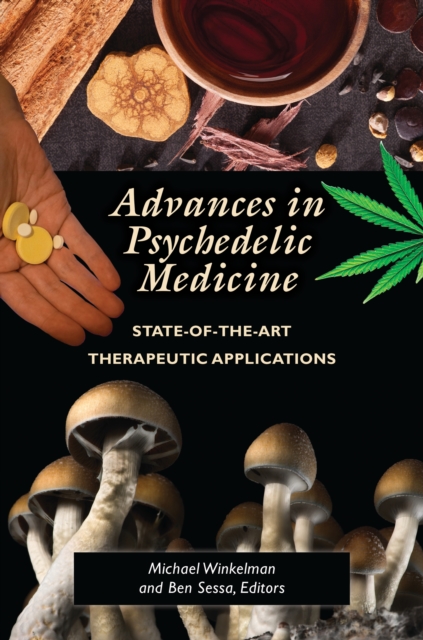
Advances in Psychedelic Medicine: State-of-the-Art Therapeutic Applications


edited by Michael J. Winkelman, Ben Sessa MD


More than a decade ago, the U.S. government lifted its ban on all testing of psychedelic substances. 

Winkelman and Sessa now provide updated scientific research and applications of these substances, now moving into approved categories of medicine. 

The text is an up-to-date assessment of the latest advances in the field of psychedelic medicine, covering the use of LSD, psilocybin, MDMA, ayahuasca, and other substances to augment psychotherapies for a range of disorders. 

It discusses medical and psychiatric concerns, clinical efficacy and safety, ethical considerations, and neuroscience findings regarding the psychedelic compounds.


Topics covered include 

- an overview of psychiatric applications of psychedelics; 
- treatments for addictions and depressive disorders; 
- effects of psychedelics on inflammation and neuroplasticity; 
- evidence for clinical applications of DMT, ayahuasca, and cannabidiol; 
- psychedelic treatment of sociopathic disorders; 
- microdosing psychedelics; 
- training psychedelic therapists; and 
- community-based harm reduction approaches to managing psychedelic crises.


Mazatec Mushroom Usage: Notes on Approach, Setting and Species for Curious Psilonauts 


 Sam Gandy


“There is a world beyond ours, a world that is far away, nearby and invisible. And there is where God lives, where the dead live, the spirits and the saints, a world where everything has already happened and everything is known. 


This world talks. It has a language of its own. I report what it says. 

The sacred mushroom takes me by the hand and brings me to the world where everything is known. It is they, the sacred mushrooms, that speak in a way I can understand. 

I ask them and they answer me. When I return from the trip that I have taken with them, I tell what they have told me and what they have shown me.”

 – Maria Sabina


Link: 
http://realitysandwich.com/323749/mazatec-mushroom-usage-notes-on-approach-setting-and-species-for-curious-psilonauts/



The approach used in modern therapeutic psilocybin sessions can be summarized as “trust, surrender, let go”. Expanding on this, Dr William Richards (senior Johns Hopkins psychedelic researcher at Johns Hopkins) offers the following insight:

“The same force that takes you deep within will, of its own impetus, return you safely to the everyday world,” the manual offers at one point.

Guides are instructed to remind subjects that they’ll never be left alone and not to worry about their bodies while journeying, since they will be monitored. If you feel like you’re “dying, melting, dissolving, exploding, going crazy etc.—go ahead, embrace it: Climb staircases, open doors, explore paths, fly over landscapes.”

And if you confront anything frightening, “look the monster in the eye and move towards it. . . . Dig in your heels; ask, ‘What are you doing in my mind?’ Or, ‘What can I learn from you?’ Look for the darkest corner in the basement, and shine your light there.”1

This approach has been successfully applied in therapeutic psilocybin sessions at Johns Hopkins, N.Y.U. and Imperial College London and other institutions exploring the therapeutic potential of psilocybin, and appears to buffer against the adverse reactions sometimes associated with recreational use of psilocybin.

The recommended setting is a comfortable room with subdued lighting, with the participant lying down wearing eye shades on a bed or sofa, listening to playlist of carefully selected, predominantly instrumental music (avoiding human vocals) playing through headphones, ensuring comfort and encouraging the experiencer to focus inwards.

The lyrical narrative of human vocals is avoided as they tend to be emotive and powerfully influence people’s experiences in certain ways. This approach has its merits and the results of some of the modern studies speak for themselves.  However, this is a stark divergence from the approach employed by Mazatec curanderos, or shamans.

Several indigenous groups in Mexico are known to practice the ceremonial use of Psilocybe mushrooms, or what they refer to as los Santos Niños (“the Little Saints”) or nti si tho (“the little ones who spring forth”): the Nahuatls in the states of Mexico, Morelos and Puebla; the Matlazincs in the state of Mexico; the Totonacs in the state of Veracruz; and the Mazatecs, Mixes, Zapotecs and Chatins in the state of Oaxaca.7 Of these, the epicentre of usage in Mexico can be considered among the Mazatec, who are considered to possess the greatest knowledge of mushroom lore. They employ mushrooms for problem solving, physical, psychological and spiritual healing, and seeking lost or stolen objects.

Ancient tradition calls for fasting prior to ingesting mushrooms, with the exception of fruit and water if necessary. Alcohol and other drugs are avoided before and after the ceremony, or velada. One is recommend to bathe prior to the experience and wear clean white or brightly coloured clothing, while black is avoided. Powdered San Pedro (Nicotiana rustica) tobacco may be used alongside the mushrooms, applied topically to the wrists and forearms by the shaman as a tonic for the body. The tobacco is believed to have magical and remedial qualities, and is also used as an offering on the altar. Sexual abstinence is usually recommended for several days before and after a ceremony, and pork tends to be avoided during this time.

Communion with the mushroom is to be approached with humility and respect, but not fear. One should remain calm and be prepared for mental turbulence that can accompany entry into the bemushroomed realms. It is good to remain silent and speak as little as possible, at least in the beginning phase of the mushroom velada. Excessive talking can detract from the focus and energy of the experience, so conversations are reserved for later. Only the mushroom imbibers should be present, and overall, the fewer the better, as too many people may taint the atmosphere.

A single species of Psilocybe is employed in a given ceremony, and mixing of different species is avoided. Mushrooms are cleansed in copal smoke prior to ingestion, and are consumed fresh, in pairs on an empty stomach. People are encouraged to take their time to chew the mushrooms thoroughly, which allows one’s system to adjust to the experience. Unsweetened cacao is often consumed alongside the mushrooms, this being a custom practiced by the Aztec as part of their mushroom ceremonies, and according to some it greatly intensifies the visionary aspect of the mushroom. Following consumption of the mushrooms, candles are blown out, and total darkness descends. Mazatec shamans may chant and perform bodywork on participants during the velada with their hands. 


Natalia blessing mushrooms in copal smoke. Credit: Christopher Casuse

Unlike the clinical therapeutic approach, the shaman ingests psilocybin alongside their patients. At the present time, patients are only permitted 1-3 psilocybin sessions in a research study context, whereas in the traditional Mazatec context, people have the option of repeated and regular sessions. The Mazatec often consume mushrooms in family groups, which is rare outside the traditional context of the velada.

The Mazatec velada setting is usually in the shaman’s home, in a room with an altar. Sessions take place during the night, often in darkness, or sometimes with candle light. This is to minimise distractions and focus the mind. A velada may begin in pitch darkness, to ensure that visions are bright and clear (an approach that well-known psilonaut Terrence McKenna also recommended), with candles lit at a later time. The presence of candles is important…beeswax candles are favoured by the Mazatec. Candle flames serve as a neutral and absorbing focal point for a tried and tested means of anchoring awareness in the present. Candle flames have been employed in this context by many cultures and traditions, such as in yogic Trataka meditation, Buddhist Kasina meditation and in Jewish ceremonies going back many centuries. The night is recognized as the time most conducive to visionary insights and deep inner work. Despite regional, cultural and linguistic differences between various indigenous groups, this setting and timing is a shared common element.

In the context of a Mazatec mushroom velada, the focal point of the setting is a traditional altar, comprising a table adorned with images of religious figures, local cultural deities, candles, flowers and saints. The syncretic nature of the post-Colombian Mazatec tradition made it easy for them to assimilate Christian imagery into their rituals following the Spanish invasion and the spread of Catholicism that accompanied it. Psilonauts are encouraged to focus on the candles and images, with sustained attention and avoiding “falling” into the trance, maintaining their intention on invoking the sacred. The typical Western approach, where people close their eyes and allow the music to guide them, has been described by Mazatec elder shaman Natalia Martinez as a “lazy approach”, which does not allow the full potential of the mushroom to manifest.

Of course, some Westerners may not be comfortable with pictures of religious figures, but an altar can be tailored to one’s personal resonance. For example, those with a more pantheistic perspective maybe prefer natural objects, such as shells, crystals, pine cones, flowers or feathers.


Mazatec style altar.

For those training with her, Natalia offers a full dinner plate of derrumbe (“landslide”) mushrooms (P. caerulescens) and encourages experiencers to maintain awareness throughout the experience. This is deemed an invaluable exercise in training one’s perception, in order that one can navigate their experience with a clear and centred mind, and allow one to work with what the mushroom presents to an undistracted mind. This is considered an essential part of the training for those who wish to provide mushroom veladas themselves. One sits erect on a small stool before the altar, maintaining awareness and open-eyed focus on the candles and images on the altar while remaining present. The altar acts as an anchor, providing a powerful means for orientating the experience and navigating challenging content when necessary. Natalia has been doing this work up to three times a week, for the past 40 years, and has amazing energy for an 87 year old woman.

Consuming mushrooms in the Mazatec setting can result in powerful experiences and openings, and this approach may yield a very distinct set of experiences from that of the Western therapeutic approach. Consumed regularly and consistently, weekly in some cases, the practice results in a set of progressive and deepening experiences, with each building upon the previous. Working with mushrooms in this way is considered by some to constitute a form of theurgy. In the US, taking mushrooms in this traditional manner means it may qualify as a sacred plant tradition, which would be protected under the Religious Freedom Act.

The Mazatec and other indigenous Psilocybe using groups tend to take the view that different species of mushroom have different qualities or their own ‘signature’. Some are revered more than others or used for specific purposes. This view is shared by ethnobotanist Kathleen Harrison, who has worked extensively with the Mazatec and various Psilocybe species, and is commonly echoed by experienced growers and psilonauts. In the context of indigenous mushroom usage, the more potent species tend to be revered more highly. There are 53 known species of Psilocybe mushrooms in Mexico, with around a third of these used ceremonially. Only a handful of species are frequently employed in veladas. Of these, the most important and commonly used species are P. caerulescens, P. mexicana, P. cubensis, P. zapotecorum and P. hoogshagenii.7 In the Aztec language Nahuatl the umbrella term teotlaquilnanácatl (“divine mushroom that describes or paints”) is applied across species.

The Mazatec hold P. caerulescens, known as the landslide or derrumbemushroom, in particularly high regard. This species is thought to have likely been used by the Aztecs in their rituals, as documented by 16th century Spanish chronicler Bernardino de Sahagún, and referred to as teonanácatl (“flesh of the gods”). It was this species through which R. Gordon Wasson and Tim Leary had their seminal introductions to psilocybin. It is revered for its potency and its fuerza or force, the mushrooms produce a strong, physically medicinal effect, sometimes experienced as deep waves of warmth and energy in the body.

P. zapotecorum is another highly regarded and potent species, another derrumbe mushroom, known as badao zoo (“drunken mushroom”) by the Zapotec Indians. It is held on par with P. caerulescens by the Mazatec, but is a species held in particularly high esteem by the Zapotecs, from which its name is derived, and it appears to have a long history of usage among them.

P. mexicana, known as pajaritos (“little bird”) is another highly revered species used by a number of Mexican indigenous groups, it being the mushroom from which the great chemist Albert Hofmann first extracted and identified psilocybin and psilocin. It was also the most cherished species of the Mazatec shaman Maria Sabina, responsible for introducing psilocybin mushrooms to the Western world. The Mazatec say of this species ‘que suave’ (‘how smooth’). The Zapotec give this mushroom to their children as they view it as the friendliest and most forgiving. It is known by many different names among the various indigenous Mexican groups that use it, referred to as nize (“little bird”) by the Mazatec.

Another species of note is P. hoogshagenii, which is employed shamanically by the Mixe and Zapotec, and it is known by a variety of different names. In Spanish, it is referred to as los niños or los Chamaquitos (“the little boys”) as pajaritos de monte (“little birds of the woods”) by the Mazatec, and atka:t (“judge”) by the Mixe, who deem it a very wise mushroom, sought after by shamans faced with an important philosophical decision. It is interesting to note that this species (in particular P. hoogshagenii var. convexa) is highly revered by psilonauts that have grown it. It is slow to fruit, but is said to be as easy (if not easier) to cultivate than the more widely known P. cubensis. It was originally assigned the species name ‘semperviva’ which translates as ‘undying’, due to its highly resilient and tenacious nature and its ability to produce many flushes of highly potent mushrooms over many months.

P. cubensis, the San Isidro mushroom was made famous by the McKenna brothers. It has a pan-tropical distribution, growing throughout tropical and subtropical zones of the world, having spread alongside cattle farming as it grows on bovine dung. It is easily cultivated and fruits abundantly, and as a result has been cultivated worldwide. In Mexico, P. cubensis is used widely by a number of different indigenous groups, and is a dependable ally, fruiting abundantly and possessing a long growing season. It is known as di-shi-tjo-le-ra-ja (“divine mushroom of manure”) by the Mazatec. It is certainly not one of the more revered species however, and among Mexican Psilocybe-using groups is widely considered to occupy the lowest rung of the ladder of shamanic mushroom preference. Perhaps this is due to its non-native status (having being brought in with Spanish cattle), its habit of growing on dung, or its lower potency or different experiential qualities compared to other species.

San Isidro is the patron saint of the fields, farming and labour (this mushroom thriving in farmland), and some Mazatec will consume this mushroom prior to building a house or tilling a new field, or prior to embarking on some important work to give them clarity and luck. However, not all shamans will work with P. cubensis, including Maria Sabina, who never worked with it in her veladas.8However, Mestizo charlatan shamans have been known to use P. cubensis in ceremonies as a means of generating income from tourists. In 1988, Terrence McKenna had an experience with P. cubensis that was so harrowing that he swore off heroic mushroom doses altogether.9 Psilonauts with extensive experience of the different species almost universally hold the view that those revered by shamans surpass P. cubensis in experiential qualities. This species with its universal accessibility, has been profoundly important, extending its mycelial tendrils into the brains of so many members of our species, but there is more to the Psilocybe mushroom world than it alone.

The Mazatec have over 500+ years of experience of working with mushrooms and far deeper knowledge of their phenomenology and application in healing than Westerners, who are comparative newcomers to the mushroom. There is much to be learned from the Mazatec shamans, and the loss of their knowledge would be a tragedy. Due to the advent of modern medicine however, the increasing domination of Western civilisation in Mazatecan lands, and the subsequent erosion of their cultural traditions, very few of the younger generation of Mazatec are interested in pursuing healing work using mushrooms. The traditional Mazatecan shamanic approach to working with the mushroom may soon become extinct, so we ought to prioritise the preservation and transmission of their knowledge.


References

Pollan, M. (2015, February 9th) The Trip Treatment. Retrieved from https://www.newyorker.com/magazine/2015/02/09/trip-treatment
Carhart-Harris, R.L., Bolstridge, M., Day, C.M.J., Rucker J., Watts, R., Erritzoe, D.E., Kaelen, M., Giribaldi, B., Bloomfield, M., Pilling, S., Rickard, J.A., Forbes, B., Feilding, A., Taylor, D., Curran, H.V., Nutt, D.J. (2018) Psilocybin with psychological support for treatment-resistant depression: six month follow-up. Psychopharmacology, 235(2): 399-408.
Griffiths, R.R., Johnson, M.W., Carducci, M.A., Umbricht, A., Richards, W.A., Richards, B.D., Cosimano, M.P., Klinedinst, M. A. (2016). Psilocybin produces substantial and sustained decreases in depression and anxiety in patients with life-threatening cancer: A randomized doubleblind trial. Journal of Psychopharmacology, 30(12): 1181–1197.
Griffiths, R.R., Johnson, M.W., Richards, W.A., Richards, B. ., Jesse, R., MacLean, K.A., Barrett, F.S., Cosimano, M.P., Klinedinst, M. A. (2017). Psilocybin-occasioned mystical-type experience in combination with meditation and other spiritual practices produces enduring positive changes in psychological functioning and in trait measures of prosocial attitudes and behaviours. Journal of Psychopharmacology, 32(1): 49-69.
Griffiths, R. R., Richards, W. A., McCann, U., & Jesse, R. (2006). Psilocybin can occasion mystical-type experiences having substantial and sustained personal meaning and spiritual significance. Psychopharmacology, 187(3): 268–283.
Ross, S., Bossis, A., Guss, J., Agin-Liebes, G., Malone, T., Cohen, B., Mennenga, S.E., Belser, A., Kalliontzi, K., Babb, J., Su, Z., Corby, P., Schmidt, B.L. (2016) Rapid and sustained symptom reduction following psilocybin treatment for anxiety and depression in patients with life-threatening cancer: A randomized controlled trial. Journal of Psychopharmacology, 30(12): 1165–1180.
Guzmán, G. (2008) Hallucinogenic Mushrooms in Mexico: An Overview. Economic Botany, 62(3): 404-412.
Schultes, R.E., Hofmann, A., Rätsch, C. (2001) Plants of the Gods: Their Sacred, Healing, and Hallucinogenic Powers. Rochester, Vermont, USA: Healing Arts Press.
McKenna, D. (2012) The Brotherhood of the Screaming Abyss. Clearwater, Minnesota, USA: North Star Press of St. Cloud.


AUTHOR


twitter website

PhD ecologist and writer, with a passion for nature and psychedelics.


Source: 


http://realitysandwich.com/323749/mazatec-mushroom-usage-notes-on-approach-setting-and-species-for-curious-psilonauts/


Thursday, May 17, 2012

Your idea | Sasha Dichter's Blog

Your idea | Sasha Dichter's Blog


Your idea

At the start it’s just smoke, a wisp. It has no substance or form.

You can take it around to people for help shaping it, so you can better understand what it could be.

But the thing is, at the start it has no mass, and until it does it’s impossible for people to really do much of anything about it.  They can talk and you can talk, and that’s about it.

Mass gives it the ability to go places.  Mass means that with a push it can break through things.


Talk is fine, but the real work is giving your idea some mass.

Saturday, April 28, 2012

Generosity Experiment


Sasha Dichter: The Generosity Experiment | Video on TED.com


Sasha Dichter is the Director of Business Development at Acumen Fund, a nonprofit venture capital fund that invests in enterprises that serve the poor. In this role, he leads up capital raising globally for Acumen Fund, including executing a successful $100M capital raise, serving as the point person for Acumen Fund’s Partner community, and heading up global partnerships for Acumen Fund including global expansion. Sasha is a member of Acumen Fund’s leadership team and the author of the Manifesto for Nonprofit CEOs. He blogs about generosity,philanthropy and social change athttp://sashadichter.wordpress.com.

Before Acumen Fund, Sasha worked as Global Manager of Corporate Citizenship at GE Money, expanding financial offerings to underserved communities globally; and as a Senior Program Manager at IBM, spearheading the company’s corporate citizenship strategy and launching a leadership program for school administrators. Sasha began his career as a management consultant for Booz & Company in the telecommunications practice, based in New York but working primarily in Latin America and Europe. He’s also had stints with the microfinance group of Bank Rakyat Indonesia and with the venture-backed Navic Networks, recently acquired by Microsoft.

Tuesday, April 17, 2012

Mexico Every day Heroes

Heroes Chronicles is an interactive site in Mexico dedicated to mapping the locations of regular people doing heroic things... though they've expanded now to include Kazakhstan for some reason.  Check it out and map your own:
Rate: